All travel guides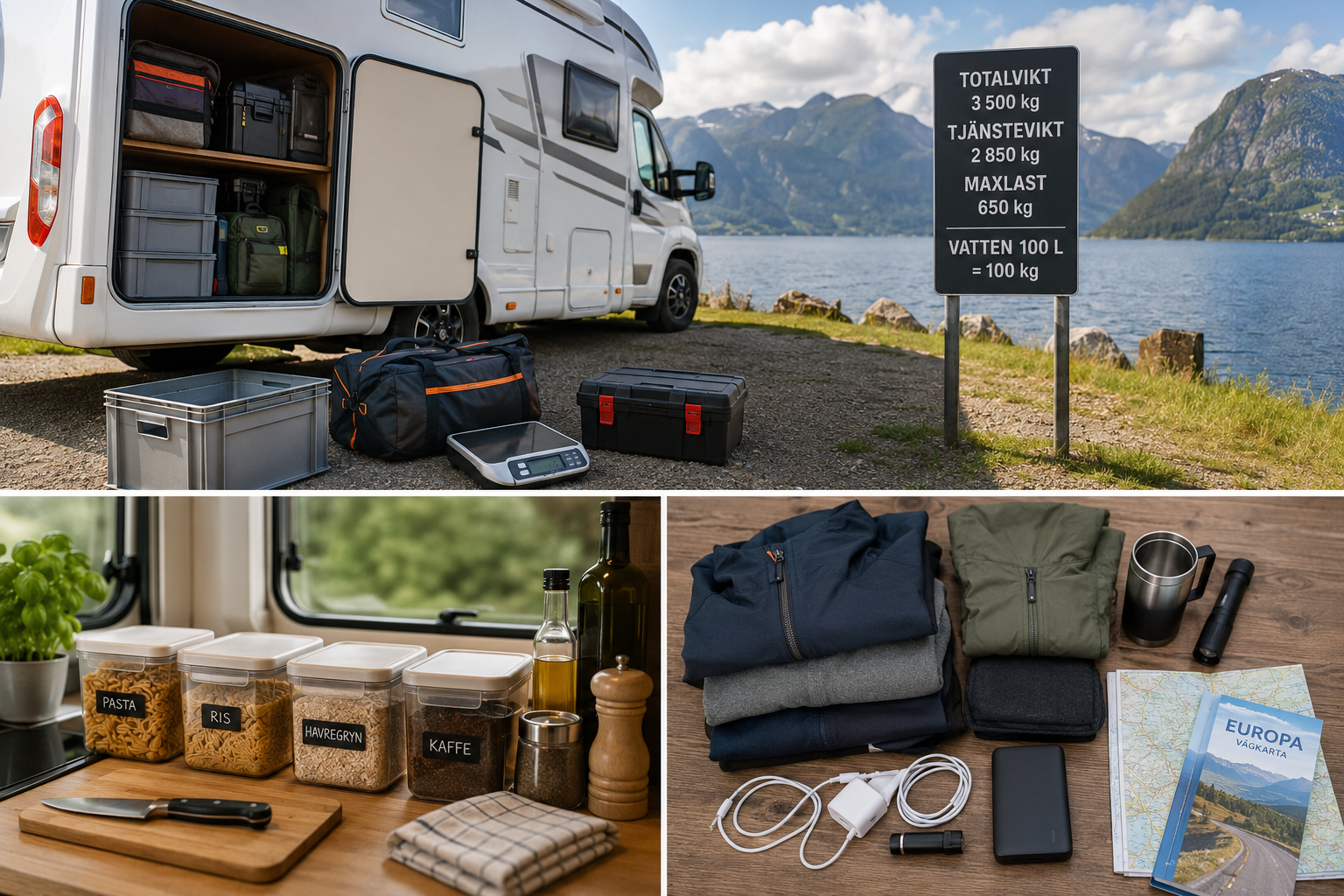
The Motorhome Packing List: How to Prepare Like a Pro
Published August 25, 2026
Packing a motorhome or caravan is a completely different game from throwing a suitcase together for a flight. It's not just about what you bring — it's about weight, weight distribution, and making sure everything actually fits without pushing you over your payload limit. Many first-timers underestimate how quickly the kilos add up once the water tank is full, the gas bottles are topped up, and the pantry is stocked. This guide walks through how to prepare practically, smartly, and without unnecessary stress before hitting the road.
Start with the weight, not the packing list
Before you even open a drawer, find out your vehicle's kerb weight and maximum payload — it's on the registration document. The difference between gross vehicle weight and kerb weight is what you actually have to work with, including passengers, fuel, water, and all your gear. A full 100-litre water tank weighs 100 kilos, and that's easy to forget. Many experienced owners weigh their loaded rig at a public weighbridge before their first big trip, just to see in black and white what they're working with. A good rule of thumb is to load heavy items — tool boxes, spare parts — as low and central as possible, ideally over the axles, to avoid ruining the handling.
Kitchen and food — pack smart, not much
A classic rookie mistake is packing the kitchen as if you're cooking a twelve-course dinner every night. In reality, a couple of multifunctional pots, a sharp knife, a cutting board, and staples like oil, salt, coffee, and pasta will get you far. Save cupboard space by decanting dry goods into flat, stackable containers instead of hauling original packaging. Also think about where you'll be shopping along the way — in Germany and Austria, even small towns usually have a decent local grocery store, so there's rarely a need to pack for more than a few days at a time. With RoadTide you can scout ahead which campsites and stops are near shops, so you can travel lighter and restock as you go instead of lugging a week's worth of groceries.
Clothes by layers, not by days
Instead of packing a separate outfit for every single day, the layering principle works far better in a motorhome with limited wardrobe space. Bring a few base layers, some mid-layers like fleece jumpers, and one solid wind- and waterproof outer shell. This works whether you're driving through the Alps' unpredictable weather or camping along the North Sea coast where the wind rarely stops. Always pack rain gear, even in summer — especially if you're heading toward mountainous regions like the Black Forest or the Dolomites, where weather can flip in an hour.
Electronics and power — know your source
Power banks, adapters, and chargers take up little space but matter enormously. Check whether your vehicle has solar panels, a leisure battery, or relies entirely on mains hook-up at campsites. A 12V-to-230V inverter is often a smart investment if you want to charge a laptop or run small kitchen appliances without always being plugged in. Don't skip a physical road map as backup — mobile coverage is still patchy in parts of the French Alps and northern Scandinavia.
Toolbox and roadside maintenance
A basic toolbox with an adjustable wrench, spanners, tape, zip ties, and spare fuses will save many a holiday. Also double-check tyre pressure, a working spare wheel or sealant kit, and a warning triangle plus hi-vis vest as required — these rules vary between countries like France, Italy, and Croatia.
Plan and book ahead — but not too much
One of the best preparations isn't physical packing at all — it's route planning. Using RoadTide to book pitches and campsites in advance, especially during peak season in popular spots like the Croatian coast or Bavaria's lakes, saves you the stress of hunting for a spot late at night. That said, leave some flexibility in the schedule — some of the best memories come from staying an extra night by a beautiful lake you didn't know existed.
The final check before you drive off
Do a quick walk-around before setting off: make sure all hatches and windows are closed and locked, the bike rack is secure, the gas is switched off while driving, and nothing loose can fly around inside the cupboards. Repeating this habit every time you leave a rest stop or campsite prevents most avoidable mishaps on the road.
With the right preparation, packing stops being a stressful chore and becomes part of the anticipation for the trip. The more trips you take, the more you refine your own packing list — until eventually you know exactly what you need, and not a kilo more.